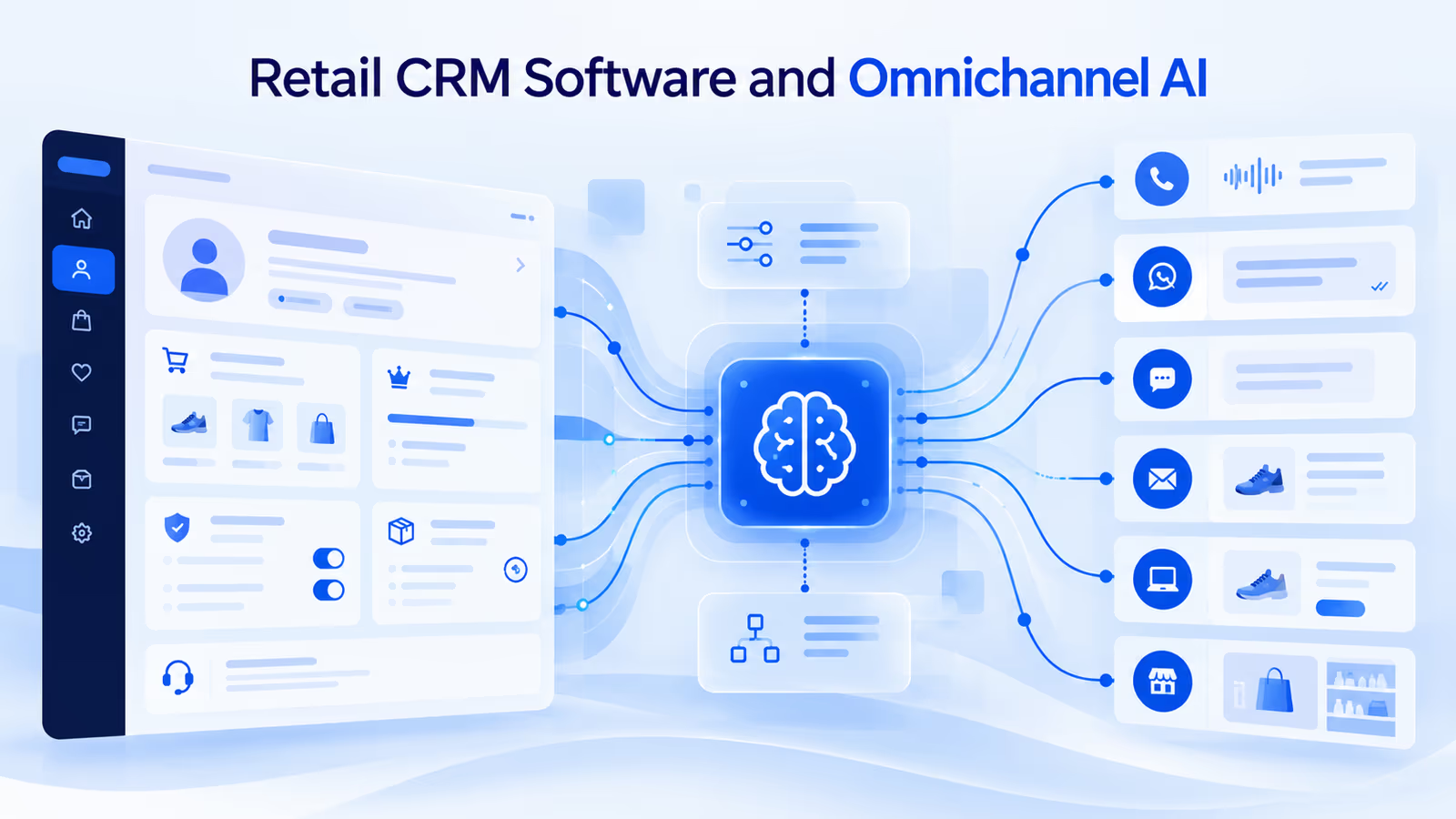


When the Promotion Works but the Experience Does Not
A shopper in Bengaluru sees a compelling offer for a refrigerator, checks the product on a marketplace, asks the brand a delivery question on WhatsApp, and visits a store to see it. The online price differs from the shelf price. The sales associate cannot verify the offer. Delivery dates are unclear, and the follow-up call repeats questions the shopper already answered. None of these failures belong to promotion alone. Together, they show why the retail marketing mix must work as a connected system.
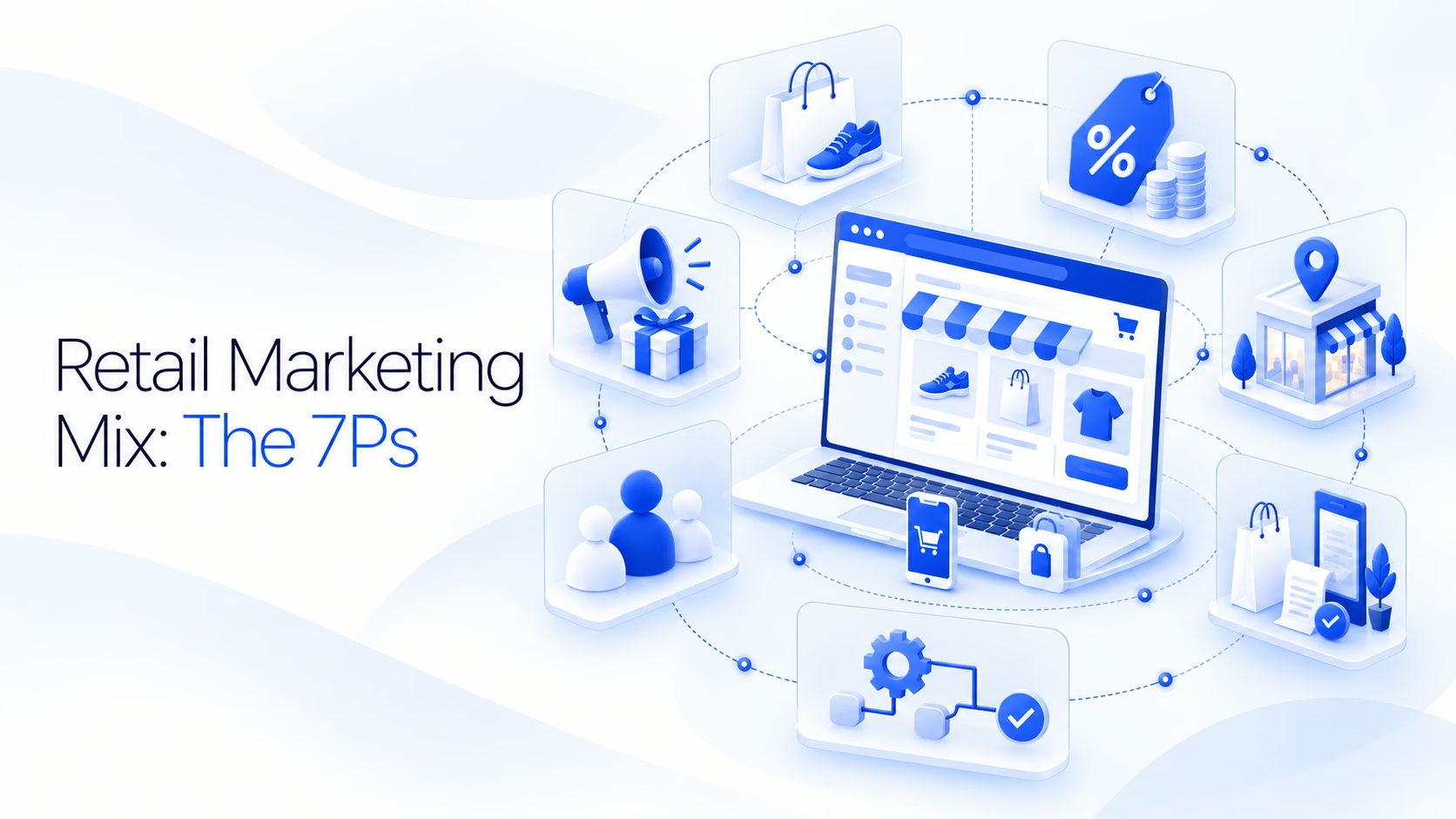
The retail marketing mix is often introduced as the 7Ps: product, price, place, promotion, people, process, and physical evidence. In omnichannel retail, every P appears across digital and physical touchpoints. A strong retail marketing mix keeps the promise, information, and service logic consistent while allowing each channel to perform its proper role. For Indian retailers, the retail marketing mix must also account for regional preferences, marketplaces, messaging, store networks, varied payment methods, last-mile realities, and multilingual conversations.
Explore connected retail with Callveriq.
What Is the Retail Marketing Mix
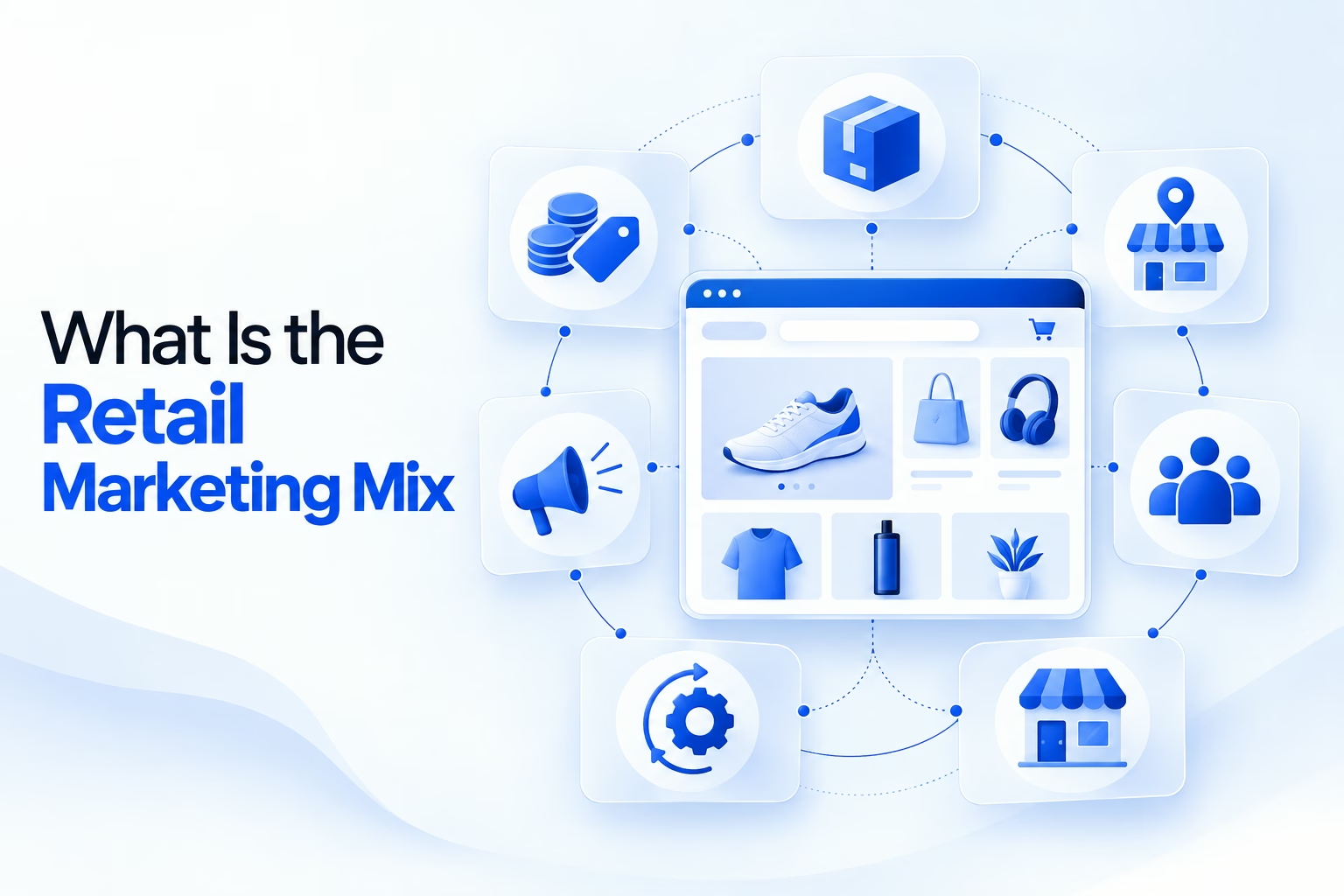
The retail marketing mix is a planning framework for aligning what a retailer sells, what shoppers pay, where transactions happen, how demand is created, who serves the customer, how the journey operates, and what evidence builds trust. The retail marketing mix expands the classic four Ps by adding people, process, and physical evidence—three factors that are especially important when service shapes the buying experience.
An omnichannel retail marketing mix does not require every channel to look identical. It requires the channels to make compatible promises. The app may offer fast discovery, the store may offer demonstration, WhatsApp may answer questions, and voice may handle a complex follow-up. The retail marketing mix is coherent when price rules, product facts, customer identity, and service commitments travel with the shopper.
McKinsey’s retail research reports that more than 70 percent of surveyed CEOs see seamless omnichannel experience as foundational to future success. The lesson for the retail marketing mix is that channel availability is not enough; operating consistency determines whether those channels feel like one retailer.
The retail marketing mix can be summarized as follows:
Map every retail P together.
How Product Price Place and Promotion Work Across Channels
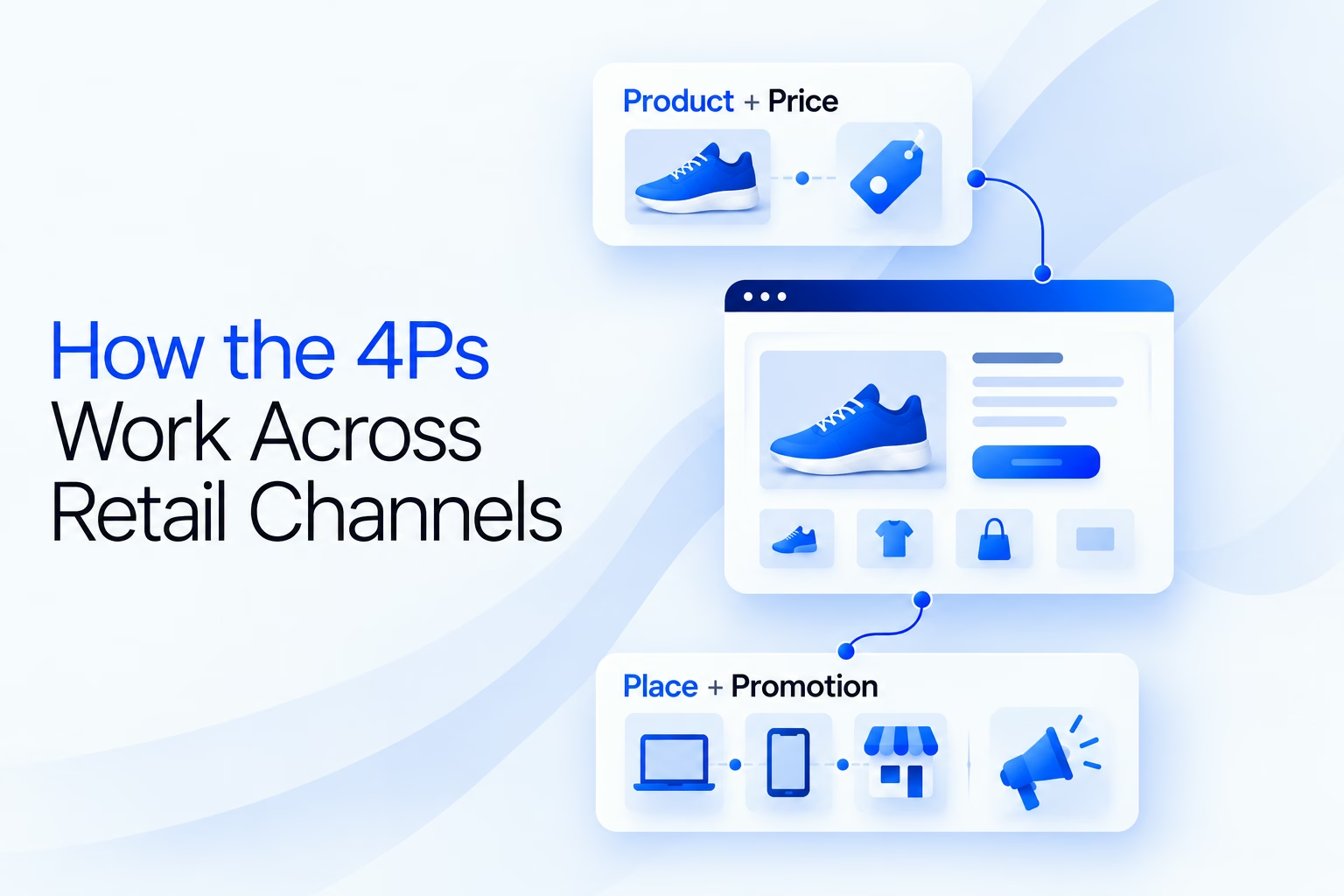
Products in the retail marketing mix include assortment, quality, packaging, variants, warranties, and product information. In omnichannel retail, the product also has a digital representation: images, specifications, reviews, comparison tools, availability, and delivery eligibility. A retail marketing mix strategy should assign ownership for product-data accuracy because conflicting information quickly weakens trust.
Price in the retail marketing mix includes the listed price, discount, financing, loyalty value, delivery charge, return cost, and the explanation for channel differences. Omnichannel retail does not always require one price everywhere, but it does require transparency. A shopper should understand whether a marketplace coupon, store bundle, or member price has distinct conditions.
Place in the retail marketing mix now includes stores, websites, apps, marketplaces, social commerce, pickup points, and delivery networks. Place is therefore both a selling decision and a fulfilment decision. A useful omnichannel retail marketing mix lets a shopper discover in one place, evaluate in another, buy in a third, and still receive coherent service.
Promotion in the retail marketing mix covers advertising, offers, content, events, loyalty communication, and assisted follow-up. Retail marketing mix examples often overemphasize the creative message. In practice, promotion succeeds only when inventory, price, staff, and process can fulfil the promise.
Salesforce’s 2025 holiday-shopping analysis showed the growing influence of AI-assisted discovery and mobile purchasing on online commerce. For the retail marketing mix, this means product data and service responses increasingly shape promotion performance in real time.
Connect product questions through Callveriq.
This blog is just the start.
Unlock the power of Callveriq’s AI with a live demo.

How People Process and Physical Evidence Complete the Experience
People make the retail marketing mix credible. Store associates, delivery staff, customer-service agents, franchise teams, social-media responders, and automated assistants all influence the experience. Training should cover more than scripts. People need accurate product information, escalation routes, language support, and enough customer context to avoid repetition.
Process determines whether the retail marketing mix can be delivered consistently. It includes enquiry routing, stock checks, appointment booking, payment, pickup, delivery, returns, complaint escalation, follow-up, and feedback. A retailer can have an excellent offer and still lose the sale because no one owns the next step. The omnichannel retail marketing mix should make ownership visible.
Physical evidence includes everything that reassures the shopper that the promise is real: store layout, packaging, receipts, verified reviews, order updates, staff identification, product demonstrations, return documentation, and message quality. In digital retail, physical evidence also includes interface clarity and the consistency of confirmation messages.
KPMG’s work on India’s digital transformation emphasizes growth alongside trusted operating models. Applied to the retail marketing mix, trust depends on clear consent, secure data handling, accurate communication, and consistent execution across partners.
The last three Ps expose a useful truth: the retail marketing mix is not owned by marketing alone. Operations, commerce, stores, service, technology, logistics, and partners all contribute to the promise customers experience.
Improve retail conversations with Callveriq.
How Do the 7Ps Apply to Omnichannel Retail in India
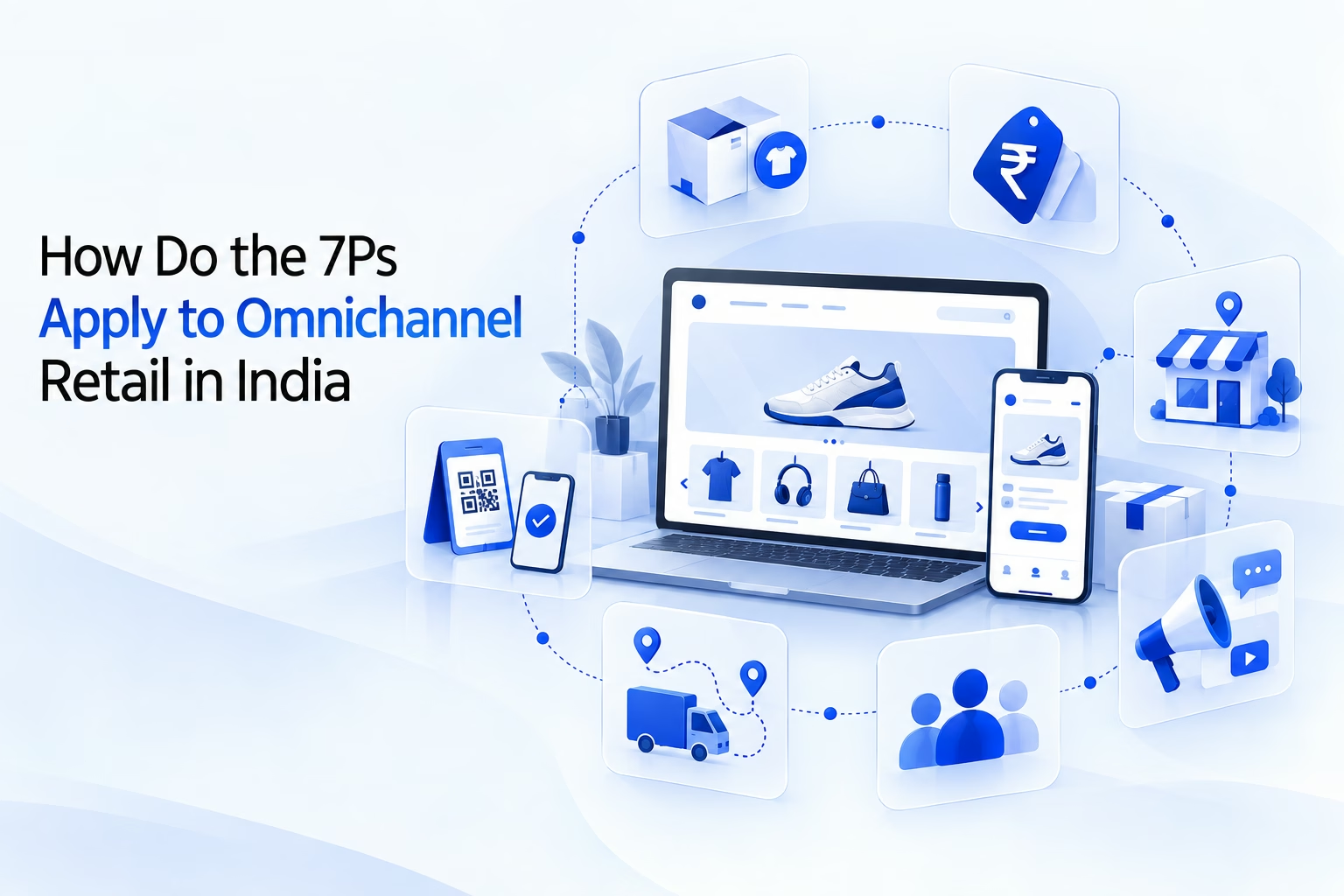
In India, the retail marketing mix should apply the 7Ps through a national framework with local execution. Product decisions should reflect climate, region, household needs, pack size, and language. Price decisions should account for marketplace promotions, financing, cash-on-delivery policies, loyalty benefits, and regional competition. Place should connect stores, marketplaces, brand sites, apps, messaging, and serviceable pin codes.
Promotion should carry the same essential conditions across advertisements, landing pages, store displays, and sales conversations. People should be prepared to support multilingual enquiries and explain local availability. Processes should define what happens when a shopper moves from online discovery to a store visit or from a store demonstration to digital payment. Physical evidence should reinforce trust through verified information, recognizable sender identity, order confirmation, transparent returns, and reliable updates.
The retail marketing mix should also distinguish metros from tier-two and tier-three markets without stereotyping customers. Retailers can use observed demand, serviceability, channel preference, and response data rather than assumptions. This makes the retail marketing mix more adaptive and more respectful.
Orchestrate Indian retail through Callveriq.
Benefits Use Cases and Measurement
A connected retail marketing mix improves consistency, makes experimentation more disciplined, and reveals why a campaign succeeds or fails. If demand is high but conversion is low, the retail marketing mix helps teams inspect price, stock, channel access, staff readiness, process delay, and trust signals before blaming creative performance.
Retail marketing mix examples include a festive electronics launch, grocery loyalty programme, fashion click-and-collect journey, furniture consultation, beauty replenishment programme, or jewellery appointment campaign. Each use case activates all seven Ps in different proportions.
For a click-and-collect programme, product data and store stock must align; price conditions must be clear; place connects online ordering with store pickup; promotion explains convenience; people prepare and hand over the order; process manages reservation and notification; physical evidence includes packaging, signage, and confirmation. The retail marketing mix makes these dependencies visible before launch.
Gartner’s 2026 CMO reporting describes pressure to produce growth with constrained budgets while scaling AI responsibly. The relevance to the retail marketing mix is that technology investment should strengthen a defined P or repair a documented hand-off.
Retailers should measure the retail marketing mix through a balanced scorecard: product-page accuracy, price-related complaints, stock-confirmation rate, promotion-to-enquiry rate, associate response time, hand-off completion, fulfilment success, return reasons, assisted conversion, and repeat purchase. No single metric describes the entire retail marketing mix.
Measure omnichannel outcomes using Callveriq.
Common Challenges and Practical Safeguards
The first challenge is treating the retail marketing mix as a campaign worksheet rather than an operating model. Teams may define product, price, place, and promotion while leaving people and process until launch. A pre-launch review should test all seven Ps against real customer journeys.
The second challenge is inconsistency across channels. The retail marketing mix needs governance for product content, offer terms, escalation rules, and policy updates. A central source of truth is useful, but it must reach frontline teams quickly.
The third challenge is excessive standardisation. An omnichannel retail marketing mix should be coherent, not rigid. Stores and regions need controlled flexibility for local stock, language, events, and community preferences. Retail marketing mix strategy should state which elements are fixed and which can adapt.
The fourth challenge is automation without boundaries. Automated conversations can support availability checks, reminders, and routine questions, but the retail marketing mix should define when a person takes over. Sensitive complaints, unclear consent, high-value exceptions, and policy disputes need human judgement.
The fifth challenge is measuring channels in isolation. The retail marketing mix should be evaluated through journey outcomes and assisted contribution. Otherwise, teams may optimize one channel while making the overall experience worse.
Govern retail automation with Callveriq.
Making the 7Ps Work as One Promise
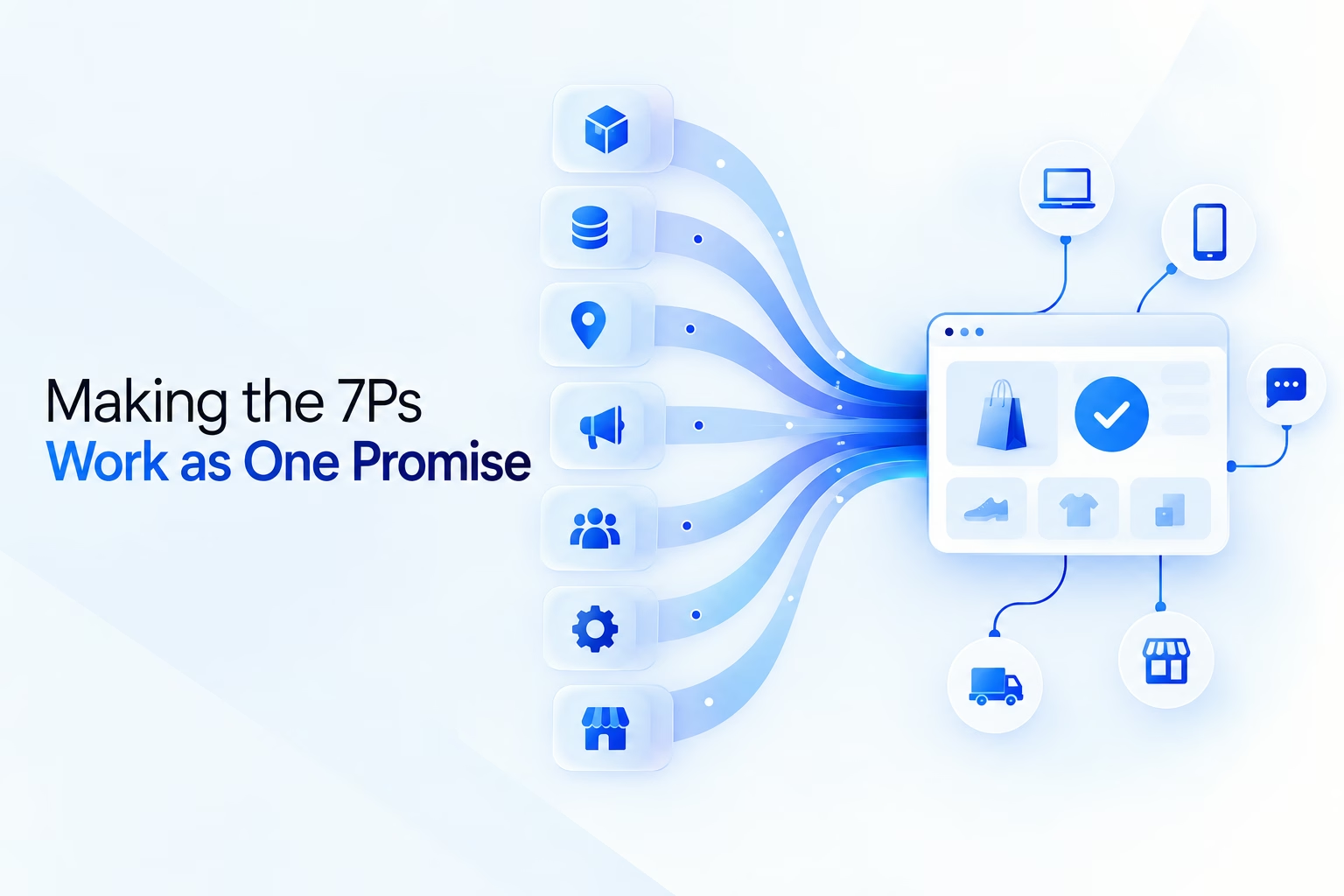
The retail marketing mix becomes valuable when the seven Ps stop functioning as separate planning labels and begin operating as one customer promise. Product accuracy, transparent pricing, connected places, credible promotion, informed people, reliable processes, and reassuring physical evidence must survive every channel change. For Indian retailers, the decisive advantage comes from making those hand-offs visible and assigning ownership before the shopper encounters a gap. The takeaway is not to add more channels, but to make every channel reinforce the same promise and next step. Callveriq can help connect the conversations that allow the retail marketing mix to work consistently across voice, WhatsApp, digital journeys, and store-led follow-up.
Connect every retail P thoughtfully. Book your Callveriq demo.
FAQs
1. Who owns the retail marketing mix inside a company?
Marketing may coordinate the retail marketing mix, but ownership is shared. Merchandising, pricing, stores, commerce, operations, service, technology, and logistics each control parts of the customer promise.
2. Is the retail marketing mix useful for online-only retailers?
Yes. In an online-only retail marketing mix, place means digital access and fulfilment; people include service and delivery teams; and physical evidence includes packaging, reviews, confirmations, and returns.
3. How often should retailers review the retail marketing mix?
Review the retail marketing mix before major launches and at a regular operating cadence. Fast-moving categories may require weekly checks, while strategic design can be reviewed quarterly.
4. Does loyalty belong within the retail marketing mix?
Loyalty touches every part of the retail marketing mix. It can shape product access, price benefits, channels, promotion, service treatment, processes, and visible recognition of membership.
5. Can the retail marketing mix reduce returns?
It can help. Accurate product information, transparent price and delivery terms, trained people, reliable processes, and credible evidence reduce preventable mismatches. The retail marketing mix cannot eliminate legitimate returns, but it can remove avoidable confusion.